

Is your cat eating a lot but still losing weight? Learn how to recognise and treat thyroid disorders – for a long, happy cat life.
Is your cat suddenly eating as if there were no tomorrow – yet still losing weight? Or are they now sleeping half the day away, even though they used to be constantly active? Changes like these may seem harmless, but sometimes there’s more to it: they might have a thyroid disorder.
Older cats in particular often develop an overactive thyroid (hyperthyroidism), a condition that sends their metabolism into overdrive. Less common is when cats suffer from an underactive thyroid (hypothyroidism) – this causes everything to slow down, as if life were moving in slow motion.
The thyroid gland is located at the front of your cat’s neck, and although it’s tiny, it has a profound effect on the functioning of thir entire body. It regulates energy balance, temperature and the cardiovascular system. When the thyroid becomes unbalanced, you’re likely to notice significant changes in your cat’s behaviour, weight and even their zest for life.
In this article, we’ll show you:
• how to identify a thyroid disorder
• what the most common causes are
• how vets make the diagnosis
• which treatment options are available and what you can do to help ensure your furry friend leads a happy life despite the diagnosis.
Thyroid disorders in cats, explained in simple terms
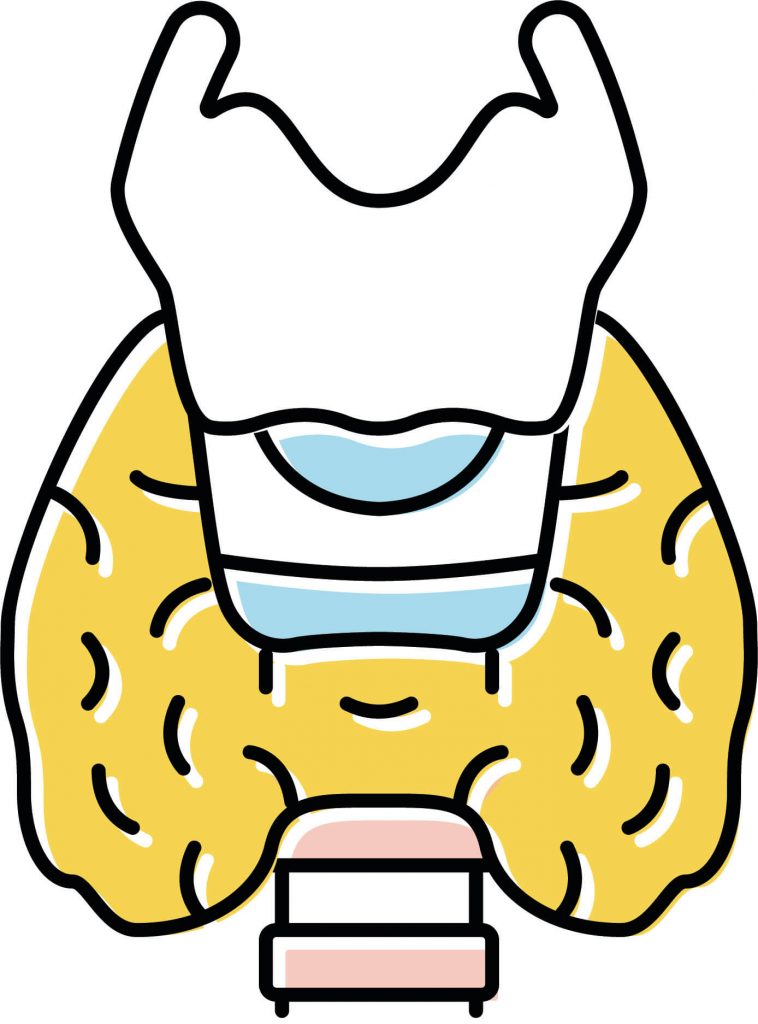
The thyroid gland is a tiny gland about the size of a grain of rice or a small bean. It is located inconspicuously in your cat’s throat and consists of two lobes to the right and left of the windpipe. Although it’s tiny, it controls almost everything in the body: energy consumption, temperature, heartbeat, etc. Without its hormones, nothing works properly.
When this sensitive system becomes unbalanced, it’s referred to as a thyroid disorder. There are two main types:
• Hyperthyroidism: This is when the thyroid gland produces too many hormones and your cat’s metabolism goes into overdrive. Older cats are often affected.
• Hypothyroidism: This is when the thyroid gland produces too few hormones, causing everything to slow down. This type of thyroid disorder is rare and usually occurs in young cats or after medical procedures.
Both variants cause noticeable changes in your cat’s behaviour and overall health. The good news is that with the proper diagnosis and treatment, these symptoms can often be effectively managed.
Which thyroid disorders occur in cats?
In cats, there are two main types of thyroid disorders:
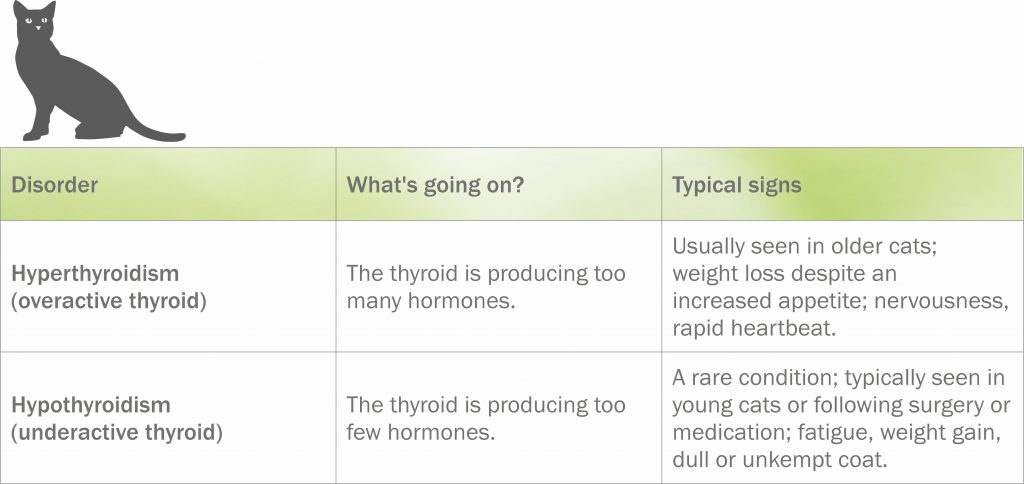
Hyperthyroidism puts your cat’s body into a constant state of stress while hypothyroidism slows it down to a snail’s pace. Both conditions can be treated – the earlier they’re detected, the better the outcome!
Hyperthyroidism in cats
If your cat suddenly seems like a completely different animal – restless and constantly hungry yet getting thinner and thinner –hyperthyroidism is often the culprit.
This is usually caused by benign changes in your cat’s thyroid tissue, which lead to excessive hormone production and keep their metabolism in a constant state of stress
Typical signs are:
1. Significant weight loss despite a big appetite
2. Restlessness, nervousness and sometimes even aggression
3. Increased heart rate and palpitations
4. Restlessness – many affected cats sleep less than usual
5. Occasional digestive issues, such as diarrhoea and vomiting
If detected early, hyperthyroidism can be treated very effectively. Many cats not only regain the weight they lost but also become noticeably calmer and enjoy an improved quality of life.
Hypothyroidism in cats
Hypothyroidism (underactive thyroid) in cats is much less common than hyperthyroidism (overactive thyroid). When it does occur, it is usually seen in young animals or develops as a result of surgery or medication.
When cats suffer from this condition, the thyroid gland produces too few hormones, causing their bodies to shift into energy-saving mode. Their metabolic processes slow down and the effects become quickly noticeable in your cat’s overall health and everyday life.
Typical symptoms include:
1. Listlessness and increased sleeping
2. Weight gain even though the cat isn’t eating more than usual
3. Dull, shaggy coat or increased hair loss
4. Sensitivity to cold – some cats seek out noticeably warm places
5. Digestive problems such as constipation
The good news is that cat owners can usually bring their cat’s condition under control by using hormone replacement therapy (such as L-thyroxine). With the appropriate treatment, it’s possible for cats to lead a stable, comfortable and symptom-free life despite their diagnosis.
How often are cats affected by thyroid disorders
Thyroid disorders are among the most common hormonal issues in cats – especially as they get older.
• Hyperthyroidism (overactive thyroid): Roughly one in ten cats over the age of 10 develop this condition during their lifetime, making it by far the most common hormonal disease in older cats.
• Hypothyroidism (underactive thyroid): This condition is much less common and usually only occurs as a secondary effect following surgery or after taking medication.
The tricky part: the symptoms of thyroid disorders often develop gradually. Many cat owners misinterpret the early changes – such as increased sleeping or slight weight loss – as “normal ageing”. This is why regular check-ups at the vet are so important: the earlier the disorder is detected, the easier it is to treat.
Symptoms of hyperthyroidism and hypothyroidism in cats
Thyroid disorders often affect not just your cat’s body, but their behaviour as well. Some cats suddenly become restless and nervous, while others withdraw and spend most of their time sleeping.
The problem is that the signs usually develop slowly. Many cat owners tend to think, “It must be old age.” But this is exactly where the danger lies. If you’re familiar with the typical symptoms, you can react more quickly – and spare your cat unnecessary suffering.
Typical differences:
• Hyperthyroidism (overactive thyroid): nervousness, increased appetite, simultaneous weight loss
• Hypothyroidism (underactive thyroid): lethargy, weight gain, dull coat
Next we’ll take a closer look at how thyroid disorders manifest in your cat’s behaviour and physical health – and which warning signs you should never ignore.
Unusual behaviour in cat
Behavioural changes are often the first warning sign:
• Hyperthyroidism: restlessness, excessive activity, increased meowing, sleep disturbances and sometimes increased aggression. Cats who suffer from the condition tend to demand food on a constant basis, as if they can’t satisfy their energy needs.
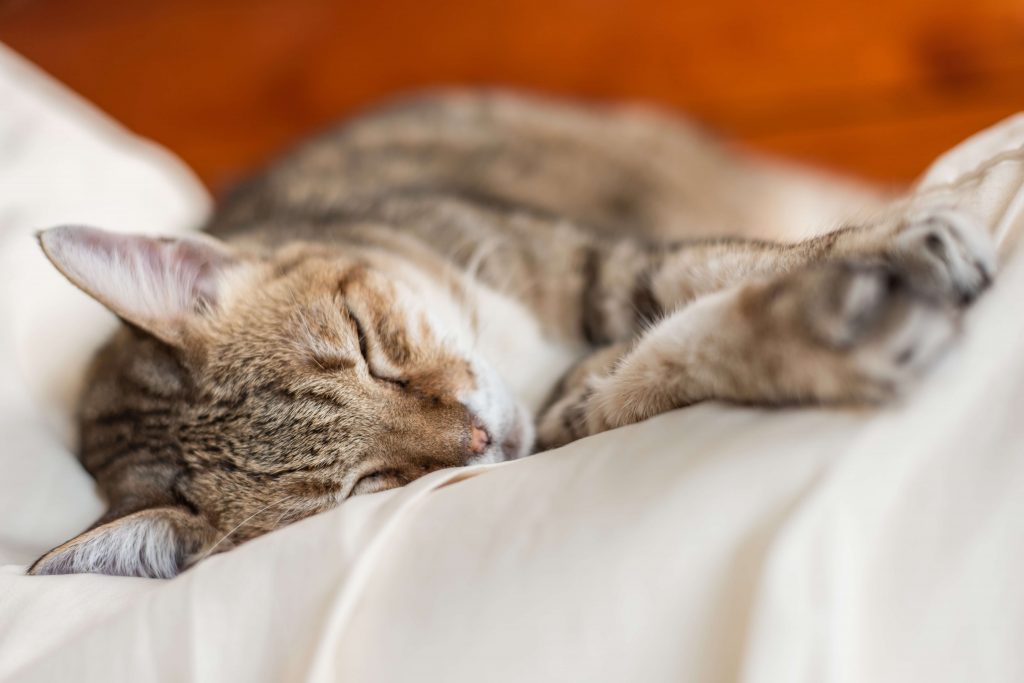
• Hypothyroidism: withdrawal, loss of interest in play, long periods of sleep and an overall “sluggish” appearance.
As a cat owner, you should always take such changes seriously – they are a clear sign that a visit to the vet is needed.
Physical symptoms in cats
Hyperthyroidism (overactive thyroid):
1.Noticeable weight loss despite a big appetite
2. Increased heart rate, sometimes accompanied by palpitations or tremors
3. Muscle loss – the cat appears thinner and more bony
4. Digestive issues such as diarrhoea or vomiting
Hypothyroidism (underactive thyroid):
1. Weight gain despite not eating more
2. Dull or unkempt coat
3. Increased hair loss
4. Sensitivity to cold – often seeking out warm spots to spend time in
5. Constipation
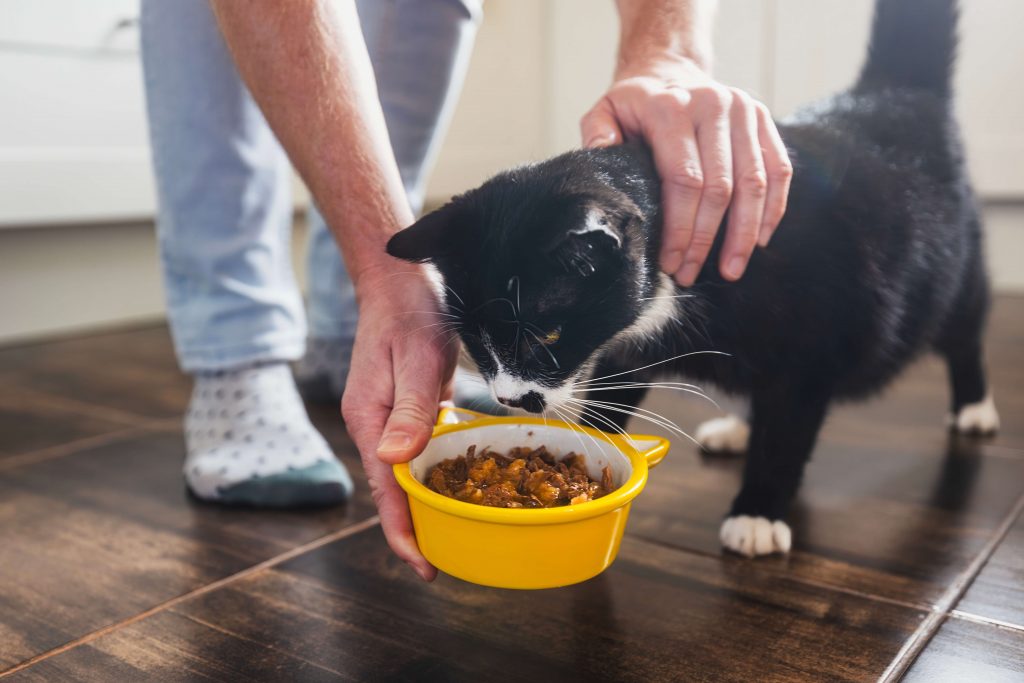
Practical example – Minka the cat
Thirteen-year-old Minka suddenly developed a ravenous appetite – yet she kept getting thinner and more restless. Her owner, Jürgen, initially thought it was a sign of ageing.
At the vet, however, a blood test revealed significantly elevated T4 levels, leading to a diagnosis of hyperthyroidism. After adjusting her medication, Minka gained weight again, became more relaxed – and enjoyed five more wonderful, carefree years
Late symptoms in cats
If a thyroid disorder goes untreated, its effects will gradually worsen – sometimes to such an extent that other organs are affected.
Possible complications of hyperthyroidism:
1. Strain on the heart → palpitations, high blood pressure
2. Damage to the kidneys
3. In severe cases: blindness due to chronically high blood pressure
Possible complications of hypothyroidism:
1. Severely slowed metabolism
2. Weakened immune system
3. Significantly reduced vitality
👉 This is why early detection is so important: the sooner the disorder is identified, the better the chances of successful treatment. Even small changes in behaviour, appetite or weight are reason enough to visit the vet.
Causes of thyroid disorders in cat
Why do cats develop thyroid problems in the first place? There’s no simple answer – often, multiple factors play a role. In many cases, it results from age-related changes in the thyroid tissue. Hormone fluctuations, environmental toxins and certain ingredients in cat food can also disrupt your cat’s delicate hormonal balance.
The better you understand the possible triggers, the easier it will be to assess the risks and take preventive measures in everyday life.
Age-related thyroid changes in cats
Over the years, a cat’s thyroid gland undergoes changes: benign nodules, known as adenomas, can form. These nodules often stimulate the gland to produce excess hormones, making them the most common cause of hyperthyroidism.
We still don’t fully understand exactly why these nodules develop. One thing is certain, however: the risk of them developing increases significantly after the age of 10. This is why preventive check-ups are particularly important for senior cats.
Hyperthyroidism in cats caused by hormonal imbalance
Some cats develop hyperthyroidism without any palpable lumps or detectable changes. In these cases, the underlying cause is often a dysfunction of the body’s control centre – the regulatory axis between the hypothalamus and pituitary gland. A genetic predisposition or sometimes excessive iodine intake (e.g. via certain food supplements) are also suspected causes.
Research in this area is still ongoing, but one thing is clear: the cause is not always a visible change in the thyroid gland itself.
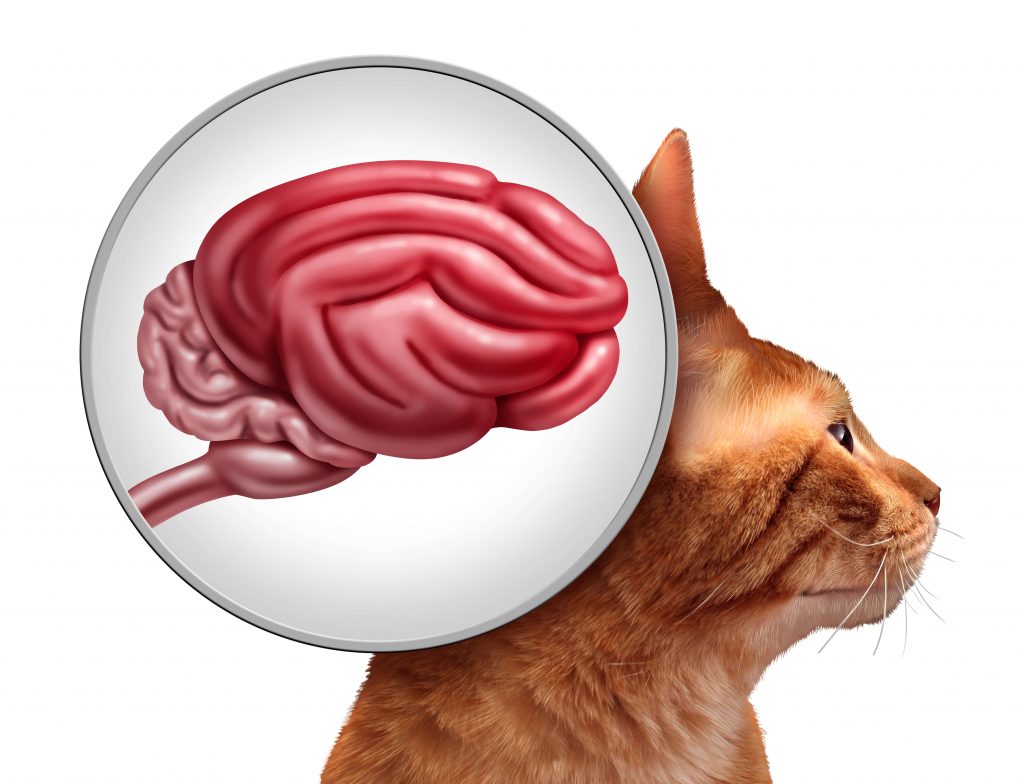
Other triggers of thyroid disease in cats
In addition to age and hormonal factors, other possible causes are:
• Environmental toxins such as PCBs or flame retardants
• Excessive iodine intake through food
• Side effects of certain medications
• Genetic factors
• Consequences of surgery or radioactive iodine therapy (which can trigger hypothyroidism)
It’s often a combination of several factors. This is why a thorough veterinary examination is necessary to narrow down the cause in each individual case.
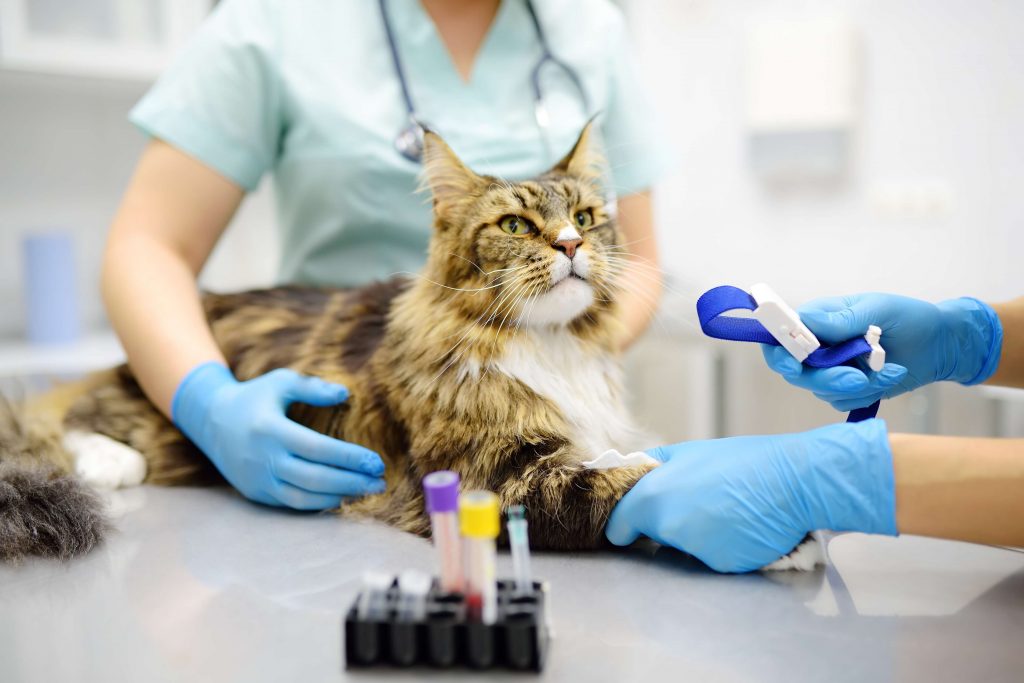
Diagnosing thyroid disorders in cats
Whether hyperthyroidism or hypothyroidism, an accurate diagnosis is essential to starting the right treatment. Veterinarians usually combine a thorough examination, blood tests and, when necessary, imaging methods such as ultrasound. For senior cats in particular, regular thyroid checks are a good idea. The earlier changes are detected, the better the condition can be managed.
Clinical assessment of thyroid disorders in cats
The first step in clinical assessment is always a thorough general examination:
1. Palpating the neck → sometimes it’s possible for the vet to actually feel an enlarged thyroid.
2. Checking the pulse and heart → for any signs of extra strain or overload.
3. Monitoring weight and overall health.
4. Observing behaviour and energy levels.
The first signs of a problem can often be spotted by looking at these factors – and then can be confirmed with blood tests.
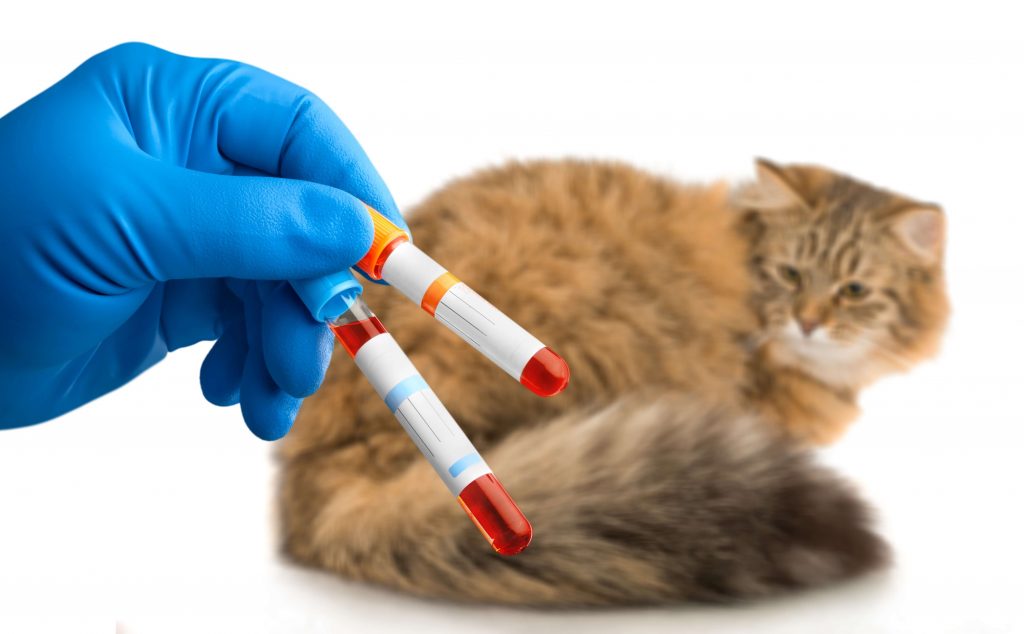
Blood tests and thyroid levels in cat
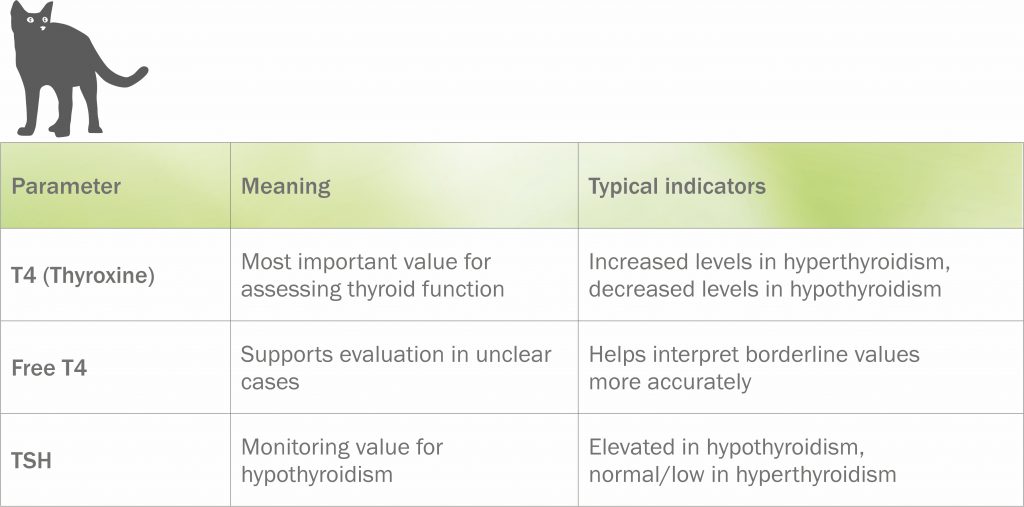
The most important value is the T4 level (thyroxine) in the blood.
• Hyperthyroidism: T4 is usually significantly elevated.
• Hypothyroidism: T4 is below the normal range.
If the results are inconclusive, your vet might suggest testing for additional values, such as free T4 or TSH. For the most reliable results, your cat should ideally be fasting before the blood sample is taken. By measuring these values, your vet will be able to determine whether your cat’s thyroid hormone production is balanced – a crucial step in making an accurate diagnosis.
👉 Regular check-ups are important, not just for diagnosis, but also for monitoring ongoing therapy.
Key thyroid values at a glance:
Thyroid ultrasound in cats
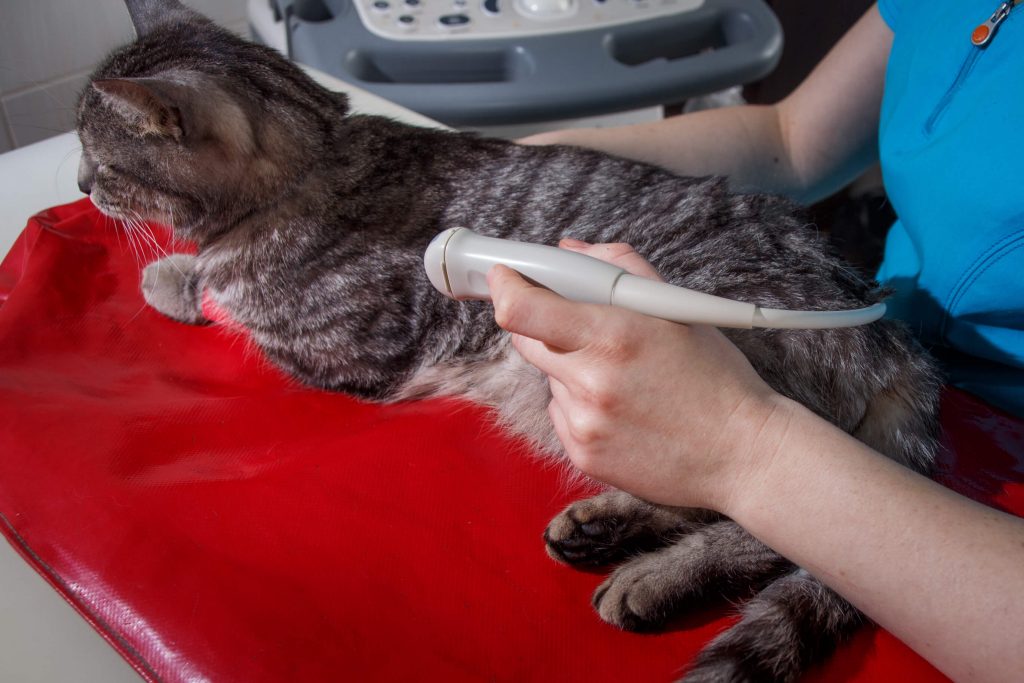
An ultrasound lets your vet see the size and structure of your cat’s thyroid gland, as well as any nodules. This helps determine whether changes are harmless, caused by inflammation or something more serious like a tumour. An ultrasound is especially useful if blood tests have produced unclear results or if thyroid cancer is suspected.
Other thyroid tests for cats
In special cases, more advanced procedures may be used:
• Scintigraphy: uses nuclear medicine to make active thyroid cells visible.
• Fine needle aspiration: involves taking small tissue samples for examination under a microscope.
These methods are usually only available at specialty veterinary clinics, but they can be crucial for ruling out rare causes or atypical cases.
Treatment options for thyroid problems in cats
The best treatment will depend on the exact diagnosis and your cat’s age and overall health. The goal will always be to stabilise hormone levels, alleviate symptoms and prevent damage to the heart, kidneys and other organs.
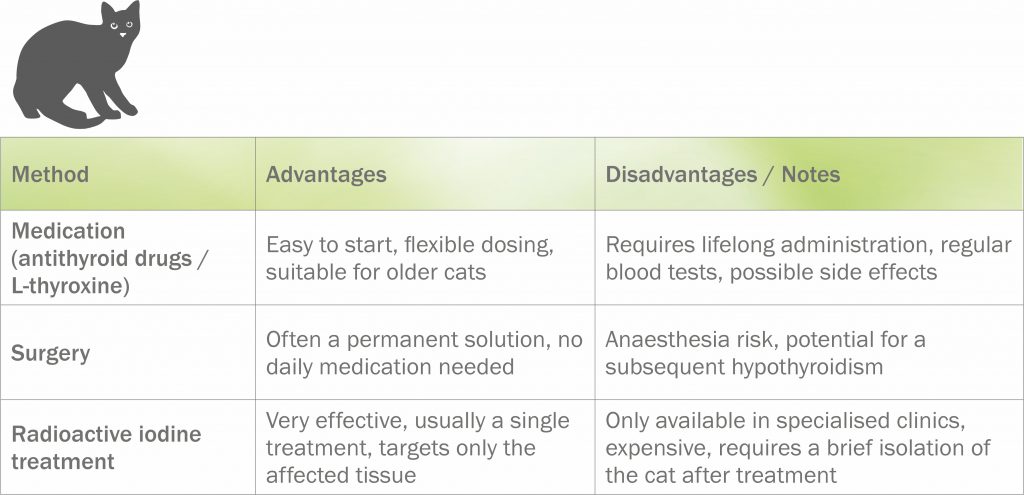
For hyperthyroidism, options include medication, surgery and radioactive iodine therapy.
For hypothyroidism, lifelong hormone replacement therapy usually helps
If started early, treatment can significantly improve your cat’s quality of life.
Thyroid medication
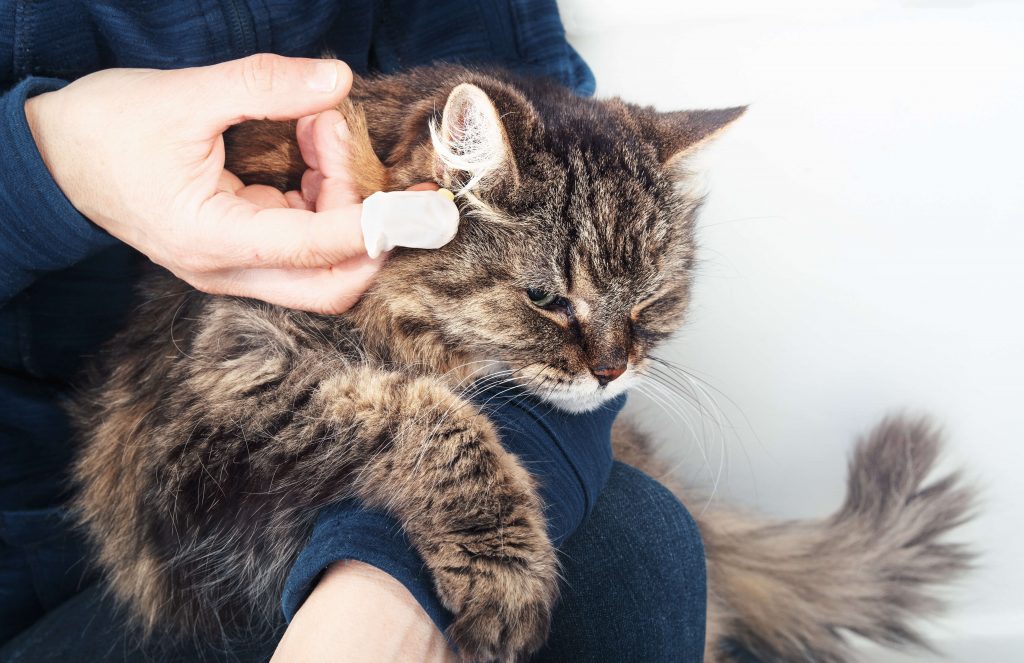
• Hyperthyroidism: Thyroid-suppressing drugs (called thionamides, e.g. methimazole) are used to treat this condition. They inhibit hormone production and usually need to be administered daily – either in the form of a pill or as a gel applied inside the ear. Please note: regular blood tests are needed to monitor how well the medication is working and to check for possible side effects.
• Hypothyroidism: In this case, the missing hormone is replaced by L-thyroxine. The dosage is adjusted individually and checked regularly until the cat’s hormone levels are stable.
Thyroid surger
If only one side of the thyroid is enlarged or if there are nodules, surgery can provide a long-term solution. This involves removing the affected tissue or the entire gland.
• Advantage: high success rate, often permanent.
• Disadvantage: hypothyroidism may develop afterwards, which then requires treatment with medication.
Surgery is particularly suitable for cats who don’t tolerate medication well or for those who shouldn’t be on long-term drug treatments.
Additional treatment options
Radioactive iodine therapy is a particularly effective treatment hyperthyroidism. This procedure involves injecting radioactive iodine into the affected thyroid tissue, causing the diseased tissue to stop functioning. This therapy is only available at specialised clinics, but is considered a very successful treatment option.
Sometimes, a specially adjusted diet can also help – especially a low-iodine diet for hyperthyroidism. But be careful: food alone is no substitute for medical treatment and should always be discussed with your vet!
Overview of treatment options:
What should you feed cats with thyroid issues?
Food alone won’t cure thyroid disorders, but it can help support treatment and improve your cat’s quality of life. Always consult with your vet when choosing the right food for your cat’s needs.
Nutrition for cats with feline thyroid disorders
The right diet depends on the type of thyroid disorder:
• For hyperthyroidism (overactive thyroid): a low-iodine diet is often recommended. Less iodine means the thyroid gland has less building material for its hormones. Although this alone is no substitute for medication, it can support treatment.
• For hypothyroidism (underactive thyroid): in this case, your cat needs a balanced, nutrient-rich diet to boost energy and strengthen the immune system. Sometimes extra iodine is needed in the food, but only if your vet recommends it.
What to watch for when choosing food
1. High-quality proteins → Maintaining muscle is particularly important in sick cats.
2. Sufficient calories → Many cats with hyperthyroidism lose weight and need extra energy.
3. Check mineral content → Iodine, in particular, should be adjusted depending on the diagnosis.
4. Regular, small meals → These help to ease digestion and support metabolism.
5. Water content → Wet food is better for the kidneys than dry food.
Home remedies and dietary supplement
• Home remedies such as herbal teas and homeopathic products have no proven effect on the thyroid gland.
• Food supplements (e.g. omega-3 fatty acids) can support your cat’s coat, skin and overall well-being, but they can never replace a treatment plan prescribed by your vet
• Important: Never experiment with your cat’s diet without guidance from a vet! Even small changes in iodine or hormone intake can make the disorder worse.
Living with a cat with thyroid issues
A thyroid disorder doesn’t mean the end of a happy life for your furry friend. With the right treatment, affected cats can often stay active, playful and cuddly for many years to come. The most important thing is to make a few adjustments to their daily routine and follow the treatment plan consistently.
Everyday living and quality of life
Many cats thrive once treatment begins. Still, they sometimes need a little extra care:
• Create quiet hiding spots your cat can retreat to if they’re is feeling stressed
• Offer smaller, more frequent meals so that they can absorb energy evenly.
• Make sure they have enough fresh water, especially if their kidneys are already affected.
• Regular play and activity keep your cat mentally fit – of course, adjusted to their particular energy level.
Check-ups and medicatio
The treatment will only work if it is monitored regularly. This includes:
1. Blood tests every few weeks during the first weeks, afterward at longer intervals.
2. Adjustment of the medication dose by your vet if the values fluctuate.
3. Patience and consistency: sometimes it takes a while to find the right dosage.
Prognosis and life expectancy
With the right treatment, cats with hyperthyroidism or hypothyroidism often have a near-normal life expectancy. What really matters is that:
• the disease is detected early,
• medication is given regularly,
• the cat is taken for regular check-ups.
Many cat owners report that once treatment begins, their furry friends seem to get “back to their old selves”– playful, cuddly and full of joie de vivre.
Thyroid disease in cats: key facts at a glance
• Frequency: Older cats in particular develop hyperthyroidism (overactive thyroid). Hypothyroidism (underactive thyroid) is very rare
Typische Symptome:
- Hyperthyroidism → weight loss despite a ravenous appetite, nervousness, rapid heartbeat.
- Hypothyroidism → fatigue, weight gain, unkempt coat.
• Diagnosis: Blood tests (T4, free T4, TSH) are key, supplemented by clinical examination and ultrasound if necessary.
• Treatment: Options include medication, surgery or radioiodine therapy – depending on the clinical picture. Hypothyroidism is usually treated with hormone replacement.
• Nutrition: A low-iodine diet can help with hyperthyroidism, but it’s no substitute for medical treatment.
• Prognosis: With timely treatment, cats have an excellent chance of enjoying many happy years.
👉 Important: Even small changes in behaviour, appetite or weight are a reason to visit the vet. Early detection makes all the difference.
Important note:
This blog article is for informational purposes only and does not replace a visit to the vet. If your cat shows any symptoms, it’s important to consult a veterinary practice. Only a vet can make a reliable diagnosis and recommend the appropriate treatment
📚 References (in German only, listed in order of mention in the article, last updated: August 2025)
- Medizinische Kleintierklinik LMU München (Small Animal Clinic, LMU Munich, c. 2021): Schilddrüsenüberfunktion (Hyperthyreose) bei der Katze. PDF-Merkblatt zur Pathophysiologie, Häufigkeit, Symptomen & Diagnostik. (Hyperthyroidism in cats. PDF fact sheet on pathophysiology, prevalence, symptoms, and diagnostics.) Available online (in German) at: https://www.med.vetmed.uni-muenchen.de/einrichtungen/innere_medizin/leistungen/endokrinologie/hyperthyreose.pdf [Accessed 6 Aug. 2025]
- 2. AniCura Tierklinik Thun AG (AniCura Animal Clinic Thun c. 2021): Hyperthyreose bei der Katze – Informationsblatt für Katzenhalter:innen, mit Symptomen, Diagnostik und Therapieoptionen (Medikamente, OP, Radiojod). (Hyperthyroidism in cats – information sheet for cat owners, including symptoms, diagnostics and treatment options, incl. medication, surgery, radioiodine.) Available online (in German) at: https://www.anicura.ch/contentassets/793f06abbca24bfa8f1cd915d8d1ba84/hyperthyreose-bei-der-katze.pdf [Accessed 6 Aug. 2025]
- 3. Laboklin Diagnostik GmbH (2023): Schilddrüse bei Hund, Katze & Co – Diagnostik, Laborparameter, T4. PDF-Report mit Angaben zur Diagnostik & Testparametern. (The thyroid in dogs, cats & others – diagnostics, laboratory parameters, T4. PDF report with information on diagnostics and test parameters.) Available online (in German) at: https://laboklin.de/wp-content/uploads/2023/03/LA_07_2011Schilddruese_Hund__Katze__Pferd_und_Co_-min.pdf [Accessed 6 Aug. 2025]
- 4. Universität Gießen / Kleintierklinik (University of Giessen / Small Animal Clinic, 2025): Besitzerinformation und Ablauf der Radiojodtherapie bei der Katze. Zielgruppenorientiertes PDF mit Indikation, Ablauf, Isolation & Risiken. (Owner information and procedure for radioiodine therapy in cats. Targeted PDF with indications, procedure, isolation and risks.) Available online (in German) at: https://www.uni-giessen.de/de/fbz/fb10/institute_klinikum/klinikum/kleintierklinik/Innere/nuklear/pat-info/2025besitzerinforjt.pdf [Accessed 6 Aug. 2025]
- 5. Tierklinik Norderstedt (Animal Clinic Norderstedt, c. 2022–2023): Nuklearmedizin – Radiojodtherapie bei Katzen (Webseite): Ablauf, Erfolgschancen (~95 %), Isolation und Strahlenschutzmaßnahmen. (Nuclear medicine – radioiodine therapy in cats (website): procedure, success rate (~95%), isolation and radiation safety measures.) Available online (in German) at: https://www.tierklinik-norderstedt.de/leistungen/nuklearmedizin [Accessed 6 Aug. 2025]
- 6. Biocontrol / Bioscientia (2024):
Feline Hyperthyreose – Therapieoptionen, inklusive jodreduzierte Ernährung als unterstützende Maßnahme. (Feline hyperthyroidism – treatment options, including iodine-restricted diets as a supportive measure.)Available online (in German) at: https://www.biocontrol.bioscientia.de/media/teqos2v1/biocontrol_hyperthyreose_feline_2024.pdf[Accessed 6 Aug. 2025]
- 7. BFT Online (2023):
Fachartikel zur Lebensqualität bei Hyperthyreose – klarer Zusammenhang zwischen Behandlung und besserer Lebensqualität. (Scientific article on quality of life in hyperthyroidism – clear link between treatment and improved quality of life.) Available online (in German) at: https://www.bft-online.de/kleintiergesundheit/hungrig-und-hyperaktiv-katzen-mit-schilddruesenueberfunktion/hintergrundinformation-schilddruesenueberfunktion-katze-1[Accessed 6 Aug. 2025]
Frequently asked questions about the thyroid in cats
In hyperthyroidism, the thyroid gland produces too many hormones. This speeds up the metabolism. As a result, the cat may eat more yet lose weight and often appears nervous. In hypothyroidism, the opposite is true – the gland produces too few hormones. The cat becomes lethargic, gains weight and often develops a dull coat.
• Overactive thyroid (hyperthyroidism): weight loss despite a big appetite, restlessness, rapid heartbeat.
• Underactive thyroid (hypothyroidism): fatigue, weight gain, unkempt coat.
Usually through a blood test that measures thyroid hormones (T4, free T4, TSH). In addition, your vet may perform a physical examination or ultrasound
With the right treatment, many cats will have a near-normal life expectancy. The earlier the disorder is detected, the better the prognosis.
Depending on the veterinary practice and laboratory, the cost will usually be around €50–€100. With the right cat insurance policy, these costs may be covered.
They’re often caused by age-related changes in the thyroid gland (nodules/adenomas). Hormonal imbalances, certain medications or too much iodine in the diet can also play a role
Yes, if left untreated, the condition can be very distressing: rapid heartbeat, restlessness and weight loss are very exhausting for cats. With treatment, most animals feel much better.
• Hyperthyroidism: It can be permanently cured through surgery or radioactive iodine therapy. Medications can control the disease but do not cure it.
• Hypothyroidism: Usually requires lifelong hormone replacement therapy.
No, in most cases they do not. With proper treatment, cats can live well. Euthanasia is only considered an option in rare, very severe end-stage cases.
Depending on the clinic and complexity of the procedure, it can cost several hundred euros – usually between €400 and €800, but this can vary.
This is a classic sign of hyperthyroidism. You should have your cat examined by a vet as soon as possible.